


Hi I am Andy, Im a PADI Master Instructor and Scuba Blogger. Since 2009 I've travelled the world, working closely with the dive community to bring you useful and interesting diving articles. Thanks for reading.
Read More | Deep Academy & Underwater Clicks
Becoming a PADI Divemaster sounds like a dream, right? Warm waters, daily dives, working in paradise… but before you jump in, let’s take a real look at what it means to go pro in diving. Is Divemaster really what you want, or is there another path that better fits your diving goals?
Why Do You Want to Become a Divemaster?
Most people sign up for the PADI Divemaster course for one of these reasons:
✅ You want a career in diving.
✅ You want to be a better diver.
✅ You want a challenge.
✅ You think it sounds like fun.
All of these are valid reasons, but let’s break them down. Because while the Divemaster course can absolutely be an incredible adventure, it’s not just about diving every day for fun.
A lot of divers think becoming a Divemaster means they’ll be an elite diver—but Divemaster is not the highest recreational diving level. If your goal is to master diving skills without going professional, you might actually want to become a PADI Master Scuba Diver instead.
The PADI Master Scuba Diver Rating is like earning a black belt in recreational diving. It’s the highest non-professional rating in PADI, showing you have advanced training and experience. You’ll focus purely on diving, not leading others or working in the industry.
The PADI Divemaster Qualifcation, on the other hand, is the first professional step. It’s about leading, guiding, assisting students, and becoming part of a dive operation. It’s not just about making yourself a better diver—it’s about helping others improve too.
So, which one fits your goals?

Be honest with yourself—do you want to work as a diver, or do you just want to dive more?
Being a Divemaster isn’t about doing your own fun dives every day. You’ll be leading other divers, managing dive plans, assisting instructors, and dealing with customers. It’s rewarding, but it’s also hard work.
Your “office” might be the ocean, but your job will include:
🔹 Carrying tanks, loading boats, and setting up gear.
🔹 Guiding dives and keeping divers safe.
🔹 Assisting instructors with student training.
🔹 Long hours, early starts, and sometimes challenging conditions.
If that excites you—great! The Divemaster course is for you. But if you’d rather just dive for fun, consider whether another path, like becoming a PADI Master Scuba Diver, might be a better fit.

If you love wreck diving, deep diving, technical diving, or photography, does becoming a Divemaster fit into your long-term goals?
If you’re aiming to be a wreck diver, tech diver, or underwater photographer, you might want to focus on specialty courses instead.
Understanding this, we designed Diving Internships tailored to specific types of diver.
Becoming a Divemaster can help if you want to work in the industry, but it’s not required for many diving careers.
Here’s how different diving interests might influence your decision:
📷 Underwater Photographer – Instead of Divemaster, you could focus on specialtie like Underwater Photography, Buoyancy Control and Fish ID so that you become proficient creating underwater imaging, have excellent control whilst doing so and know a thing or two about the marine life you’ll be photographing. From there you can refine your talent, offer your services following divers as oppose to leading them and gain experience working with dive shops for marketing.
⚓ Wreck Diver Internship – Training in wreck diving take many forms, Wrecks are typically deep dives, so training in Deep diving, using enriched air nitrox and branching into tech diving might be more valuable than the Divemaster course, unless of course you might want the thrill of leading wreck exploration or teaching wreck diving.
🔧 Technical Diver – If you want to excel in your diving skills, go beyond recreational limits and explore then technical diving is a better choice than divemaster. You’ll start with aiming towards master diver taking advanced, deep, and nitrox before branching off into the PADI Tec Deep program and work toward full tech certifications instead of pro diving ones.
🌊 Marine Biologist or Conservation Diver – A Divemaster certification might help, even though many conservation groups focus more on scientific diving Divemaster training could be valuable to a leadership role in this area since you’ll be planning and perhaps even leading scientific diving expeditions.
That’s not to say Divemaster won’t help—it absolutely can! But it’s important to ask if it’s the best step for your personal diving goals.
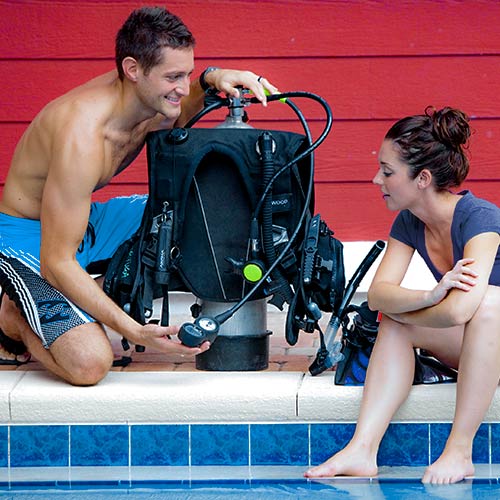
Once you’re working as a Divemaster, you’ll see how dive shops run. You’ll meet instructors who make a living teaching scuba, and it’s easy to start thinking:
“Wait, why am I guiding dives when I could be teaching and making more money?”
That’s why so many Divemasters go on to become instructors. As an instructor, you can:
💰 Earn more money.
🌍 Have more job opportunities worldwide.
🎓 Teach your own students instead of just assisting.
So if your ultimate goal is to work in diving long-term, you might want to plan for becoming an instructor from the start.

If you’ve read all this and still think Divemaster is right for you, then go for it! It’s an incredible experience that can change your life, whether you make a career out of it or not.
But if you’re unsure, take a step back and think:
👉 Do I want to work in diving, or do I just want to dive more?
👉 Does Divemaster fit into my long-term goals?
👉 Would a different path—like Master Scuba Diver or specialties—be better for me?
No matter what, diving should be about passion, adventure, and making the most of your time underwater. Choose the path that excites you the most, and dive right in!
Becoming a PADI Dive Pro is a big step, contact us and talk one of our Pro dive mentors about your Professional diver training and diving internship opportunities.
Latest Alerts / Updates

Simply contact us and ask about the course or internship you are interested in, please include your current dive certs, number of dives and when you are thinking of training. We’ll explain your options.


 protected by reCAPTCHA